Drag

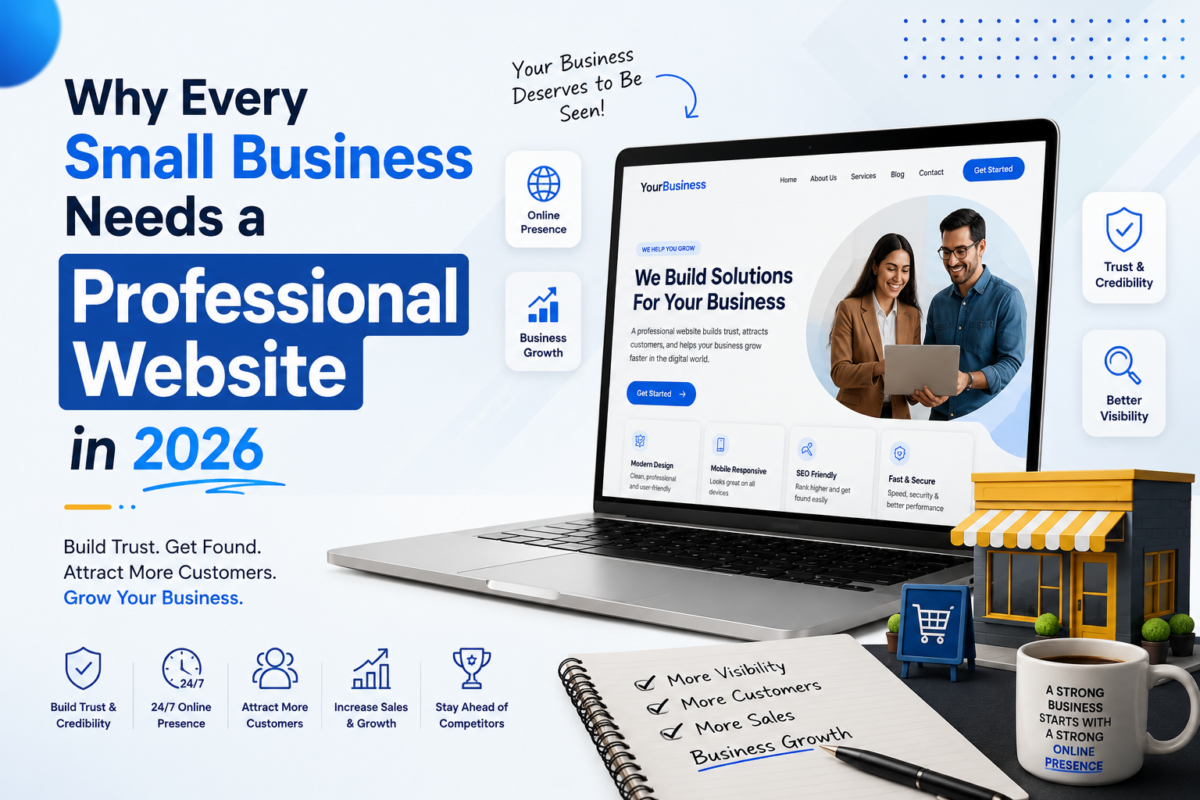
Why Every Small Business Needs a Professional Website in 2026

The digital landscape has changed dramatically over the past few years. In 2026, having a professional website is no longer a luxury—it’s a necessity for every small business. Whether you own a local restaurant, retail store, construction company, consultancy, beauty salon, or eCommerce business, your website has become the foundation of your brand’s online presence.

Today’s customers search online before making almost every purchasing decision. If they can’t find your business—or if your website looks outdated—they’re likely to choose a competitor instead.

Let’s explore why investing in a professional website is one of the smartest business decisions you can make in 2026.


1. Your Website Creates the First Impression

Your website is often the first interaction potential customers have with your business.

Within just a few seconds, visitors decide whether your business appears trustworthy and professional.

A professionally designed website provides:

  • Modern and attractive design
  • Fast loading speed
  • Easy navigation
  • Mobile responsiveness
  • Professional branding
  • Clear call-to-action buttons

A poor website, on the other hand, can drive customers away before they even learn about your services.


2. Customers Expect Businesses to Have a Website

In 2026, customers expect every legitimate business to have an online presence.

Before making a purchase, people typically search for:

  • Business information
  • Services
  • Pricing
  • Reviews
  • Contact details
  • Business hours
  • Portfolio
  • Location

If they can’t find this information quickly, they’ll move on to another business.

A professional website ensures customers always have access to your business—24 hours a day.


3. Build Trust and Credibility

A professional website instantly makes your business appear more credible.

Trust-building features include:

  • Customer testimonials
  • Google Reviews
  • Certifications
  • Awards
  • Case studies
  • Client logos
  • Secure HTTPS connection
  • Professional business email

These elements reassure visitors that your business is genuine and reliable.


4. Reach More Customers Through Google Search

Most buying journeys begin with a Google search.

When someone searches for:

  • “Best plumber near me”
  • “Digital marketing agency”
  • “Website designer”
  • “Local bakery”

Google displays businesses with strong online visibility.

A properly optimized website helps your business appear in search results through Search Engine Optimization (SEO).

Benefits include:

  • More organic traffic
  • Higher search rankings
  • Increased brand visibility
  • Better local search performance
  • More qualified leads

5. Mobile Users Dominate the Internet

More than half of all website traffic now comes from smartphones.

If your website isn’t mobile-friendly, visitors may experience:

  • Tiny text
  • Slow loading
  • Broken layouts
  • Difficult navigation

A responsive website automatically adjusts to every screen size, creating a seamless experience across:

  • Smartphones
  • Tablets
  • Laptops
  • Desktop computers

6. Your Website Works 24/7

Unlike a physical store, your website never closes.

Even when you’re sleeping, customers can:

  • Learn about your business
  • Browse products
  • Request quotes
  • Book appointments
  • Send inquiries
  • Purchase products
  • Download brochures

Your website becomes a full-time digital salesperson.


7. Generate More Leads

A professional website is designed to convert visitors into customers.

Conversion features include:

  • Contact forms
  • WhatsApp integration
  • Live chat
  • Call buttons
  • Appointment booking
  • Quote request forms
  • Newsletter signup

These features make it easy for potential customers to connect with your business.


8. Improve Your Marketing Results

Every marketing campaign should direct users to your website.

Whether you’re running:

  • Facebook Ads
  • Google Ads
  • Instagram promotions
  • LinkedIn campaigns
  • Email marketing

A professional landing page improves conversion rates and maximizes your advertising investment.

Without a quality website, much of your marketing budget may be wasted.


9. Showcase Your Products and Services

A website allows you to present your offerings in a professional way.

Include:

  • High-quality images
  • Service descriptions
  • Product catalogs
  • Pricing
  • Videos
  • FAQs
  • Customer reviews

This helps customers make informed purchasing decisions.


10. Stay Ahead of Your Competitors

Your competitors are already investing in digital marketing.

If they have:

  • Better websites
  • Faster loading speeds
  • Higher Google rankings
  • Better user experience

They’re likely capturing customers who could have chosen your business.

A professional website helps level the playing field.


11. Collect Valuable Customer Insights

Modern websites integrate with analytics tools to help you understand customer behavior.

You can track:

  • Visitor numbers
  • Popular pages
  • Traffic sources
  • Conversion rates
  • User locations
  • Device usage

This data helps you make smarter marketing and business decisions.


12. Strengthen Your Brand Identity

A consistent online presence builds recognition.

Your website should reflect your brand through:

  • Professional logo
  • Consistent colors
  • Typography
  • Brand messaging
  • High-quality visuals

Strong branding helps customers remember your business and builds long-term loyalty.


Essential Features Every Small Business Website Should Have in 2026

A modern business website should include:

  • Responsive design
  • Fast loading speed
  • SSL security (HTTPS)
  • SEO optimization
  • Contact forms
  • Google Maps integration
  • WhatsApp chat
  • Social media links
  • Blog section
  • Testimonials
  • Portfolio or gallery
  • Clear calls-to-action
  • Analytics integration
  • Accessibility features
  • Easy-to-manage content system

Emerging Trends for Business Websites in 2026

Businesses that stay ahead are adopting new technologies such as:

  • AI-powered chatbots
  • Personalized user experiences
  • Voice search optimization
  • Interactive content
  • Advanced website security
  • Faster Core Web Vitals performance
  • Video-first landing pages
  • AI-assisted customer support
  • Automated appointment scheduling

These features enhance user engagement and improve customer satisfaction.


The Cost of Not Having a Professional Website

Without a professional website, your business may face:

  • Lost sales opportunities
  • Reduced customer trust
  • Lower Google visibility
  • Weaker brand recognition
  • Poor marketing performance
  • Fewer customer inquiries
  • Competitive disadvantage

In today’s digital economy, not having a website often means missing out on potential revenue.


Final Thoughts

In 2026, a professional website is one of the most valuable investments a small business can make. It serves as your digital storefront, marketing hub, customer support center, and lead-generation engine—all in one place.

Whether you’re launching a new business or upgrading an outdated site, investing in a modern, fast, secure, and SEO-friendly website can help you attract more customers, build credibility, and drive long-term growth.

The businesses that embrace digital transformation today will be better positioned to compete and succeed in the years ahead.


Frequently Asked Questions (FAQs)

How much does a professional small business website cost?

Costs vary depending on the features, design, and functionality required. A basic business website is generally more affordable than a custom-built eCommerce or enterprise solution.

Is a Facebook page enough for my business?

No. While social media is valuable for engagement, a website gives you full control over your brand, content, customer experience, and search engine visibility.

How long does it take to build a professional website?

A standard small business website typically takes between 2 and 6 weeks, depending on the project’s scope and complexity.

Why is SEO important for small businesses?

SEO helps your website rank higher in search engine results, making it easier for potential customers to discover your business organically.

Should I update my website regularly?

Yes. Regular updates with fresh content, blog posts, security patches, and performance improvements keep your website relevant, secure, and competitive.
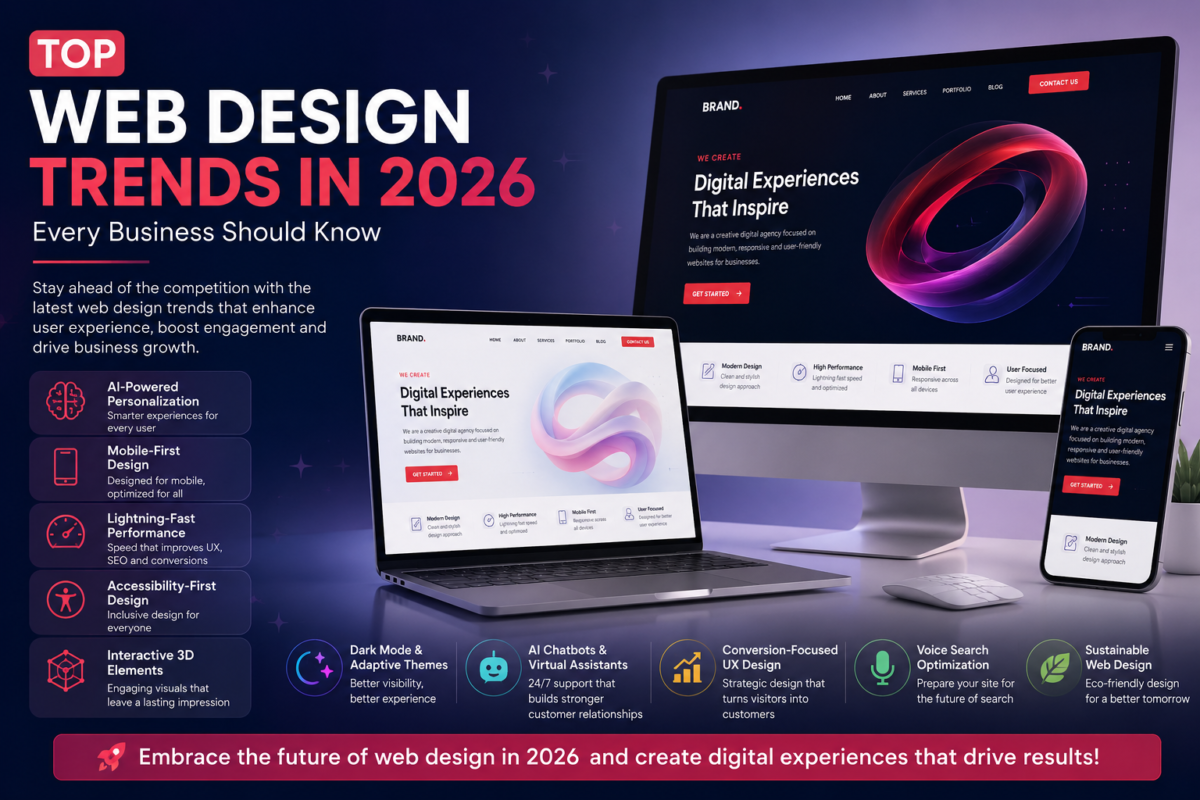
Top Web Design Trends in 2026 Every Business Should Know

Introduction

Your website is often the first interaction potential customers have with your business. In 2026, web design is no longer just about aesthetics—it’s about creating fast, intelligent, accessible, and conversion-focused digital experiences.

As technology evolves and user expectations continue to rise, businesses that embrace modern web design trends will stand out from the competition, improve user engagement, and generate more leads.

In this article, we’ll explore the top web design trends in 2026 that every business should know to stay ahead in the digital landscape.


1. AI-Powered Personalization

Artificial Intelligence is transforming websites into smart digital experiences. Modern websites can now personalize content based on user behavior, location, browsing history, and preferences.

Benefits

  • Personalized landing pages
  • Dynamic product recommendations
  • Intelligent search functionality
  • Customized call-to-action buttons
  • Higher conversion rates

Businesses using AI-driven personalization create more engaging customer experiences that encourage visitors to stay longer and convert faster.


2. Minimalist UI with Bold Visuals

Clean interfaces continue to dominate web design in 2026. Instead of overwhelming visitors with excessive elements, successful websites focus on clarity and simplicity.

Key Characteristics

  • Plenty of white space
  • Large typography
  • High-quality imagery
  • Bold headlines
  • Simple navigation

Minimalist design improves readability, creates a premium feel, and guides users toward important actions.


3. Micro-Animations That Improve User Experience

Subtle animations are becoming essential rather than decorative.

Examples include:

  • Button hover effects
  • Smooth page transitions
  • Scroll-triggered animations
  • Loading animations
  • Interactive icons

These micro-interactions provide visual feedback and make websites feel more responsive without affecting performance.


4. Dark Mode & Adaptive Themes

Users increasingly expect websites to support both light and dark modes.

Benefits include:

  • Reduced eye strain
  • Better readability in low light
  • Modern appearance
  • Improved battery efficiency on OLED displays
  • Enhanced user preference support

Many businesses now offer automatic theme switching based on the user’s device settings.


5. Mobile-First Design is the Standard

More than ever, users browse the internet using smartphones. Designing for desktop first is no longer enough.

A mobile-first approach focuses on:

  • Touch-friendly navigation
  • Fast loading times
  • Responsive layouts
  • Optimized images
  • Thumb-friendly buttons

Google also prioritizes mobile-friendly websites in search rankings, making responsive design essential for SEO.


6. Lightning-Fast Performance

Website speed directly impacts user satisfaction, SEO, and conversions.

Businesses are investing in:

  • Optimized images
  • Lazy loading
  • Modern image formats (WebP, AVIF)
  • Efficient code
  • CDN integration
  • Browser caching

Even a one-second improvement in page speed can significantly increase conversions.


7. Accessibility-First Design

Inclusive web design is becoming a necessity rather than an option.

Modern websites should include:

  • Keyboard navigation
  • Proper heading hierarchy
  • Sufficient color contrast
  • Alt text for images
  • Screen reader compatibility
  • Accessible forms

Accessible websites serve a broader audience and improve overall usability.


8. Interactive 3D Elements

Thanks to faster browsers and improved web technologies, lightweight 3D graphics are becoming increasingly common.

Popular implementations include:

  • Interactive product showcases
  • Animated illustrations
  • 3D icons
  • Virtual product previews
  • Immersive landing pages

When used thoughtfully, 3D elements create memorable user experiences without slowing down the site.


9. AI Chatbots & Virtual Assistants

Customer support is becoming smarter with AI-powered assistants available 24/7.

They help businesses:

  • Answer common questions instantly
  • Generate leads
  • Schedule appointments
  • Recommend products
  • Improve customer satisfaction

Modern AI chatbots provide human-like conversations and significantly reduce support workload.


10. Conversion-Focused UX Design

Great websites don’t just look beautiful—they drive results.

Businesses are focusing on:

  • Clear call-to-action buttons
  • Simplified navigation
  • Trust signals
  • Customer testimonials
  • Strategic content placement
  • Optimized contact forms

Every design decision should guide users toward taking meaningful actions.


11. Voice Search Optimization

As voice assistants become more popular, websites are adapting their content for conversational search queries.

Best practices include:

  • Natural language content
  • FAQ sections
  • Structured data
  • Fast-loading pages
  • Local SEO optimization

Voice search optimization helps businesses reach users who search using smart devices.


12. Sustainable Web Design

Eco-friendly web development is gaining momentum in 2026.

Sustainable practices include:

  • Lightweight websites
  • Efficient coding
  • Green hosting
  • Optimized media
  • Reduced server requests

A lean website consumes fewer resources, loads faster, and offers a better user experience.


Why These Trends Matter

Keeping your website updated with modern design trends isn’t just about staying fashionable. It directly impacts:

  • Search engine rankings
  • User engagement
  • Brand credibility
  • Lead generation
  • Customer trust
  • Conversion rates
  • Business growth

An outdated website can create a poor first impression, while a modern, user-friendly site builds confidence and encourages visitors to take action.


Final Thoughts

The future of web design in 2026 is centered on speed, intelligence, accessibility, personalization, and user experience. Businesses that invest in modern, conversion-focused websites will be better positioned to attract customers, strengthen their online presence, and stay competitive.

Whether you’re launching a new website or redesigning an existing one, incorporating these trends can help create a digital experience that not only looks impressive but also delivers measurable business results.

If your current website feels outdated, now is the perfect time to upgrade. A professionally designed, future-ready website can become one of your most valuable business assets in 2026 and beyond.

Future of Front-End Development: React vs. Angular vs. Vue

The landscape of front-end development has evolved rapidly, with frameworks like React, Angular, and Vue leading the charge. Each of these frameworks has its own strengths and unique features, making them popular choices among developers. In this article, we will delve into each of these frameworks, compare their features, and explore the future trends shaping front-end development.

Top Web Development Practices in 2024

In the ever-evolving world of web development, staying updated with the latest practices is essential for creating efficient, secure, and user-friendly websites. As we move further into 2024, certain trends and techniques are emerging as best practices for web development. This article explores these top web development practices that can help developers create high-quality websites that meet modern standards and user expectations.

The Future of Digital Marketing

As the digital landscape continues to evolve at a rapid pace, businesses must stay ahead of the curve to remain competitive. The future of digital marketing promises exciting advancements, driven by emerging technologies and changing consumer behaviors. In this article, we explore key trends and innovations that will shape the future of digital marketing.

Best Digital Marketing Agency Kolkata: How to Choose the Right One

When it comes to growing your business in today’s digital-first world, choosing the right digital marketing agency can make all the difference. Whether you’re looking to boost your online presence, drive more traffic, or increase sales, finding the best digital marketing agency in Kolkata is the key to unlocking your success. Let’s break down how you can identify the perfect partner for your journey.

Chat on WhatsApp