

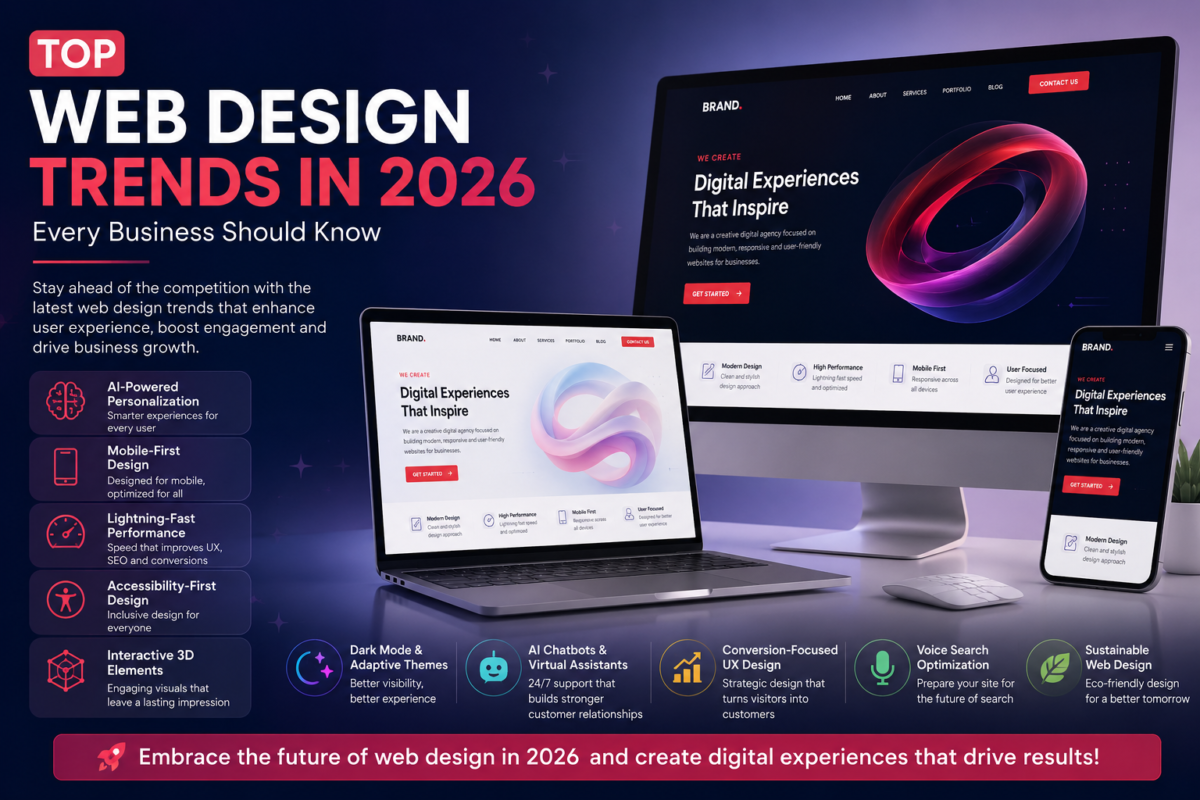
Introduction
Your website is often the first interaction potential customers have with your business. In 2026, web design is no longer just about aesthetics—it’s about creating fast, intelligent, accessible, and conversion-focused digital experiences.
As technology evolves and user expectations continue to rise, businesses that embrace modern web design trends will stand out from the competition, improve user engagement, and generate more leads.
In this article, we’ll explore the top web design trends in 2026 that every business should know to stay ahead in the digital landscape.
1. AI-Powered Personalization
Artificial Intelligence is transforming websites into smart digital experiences. Modern websites can now personalize content based on user behavior, location, browsing history, and preferences.
Benefits
- Personalized landing pages
- Dynamic product recommendations
- Intelligent search functionality
- Customized call-to-action buttons
- Higher conversion rates
Businesses using AI-driven personalization create more engaging customer experiences that encourage visitors to stay longer and convert faster.
2. Minimalist UI with Bold Visuals
Clean interfaces continue to dominate web design in 2026. Instead of overwhelming visitors with excessive elements, successful websites focus on clarity and simplicity.
Key Characteristics
- Plenty of white space
- Large typography
- High-quality imagery
- Bold headlines
- Simple navigation
Minimalist design improves readability, creates a premium feel, and guides users toward important actions.
3. Micro-Animations That Improve User Experience
Subtle animations are becoming essential rather than decorative.
Examples include:
- Button hover effects
- Smooth page transitions
- Scroll-triggered animations
- Loading animations
- Interactive icons
These micro-interactions provide visual feedback and make websites feel more responsive without affecting performance.
4. Dark Mode & Adaptive Themes
Users increasingly expect websites to support both light and dark modes.
Benefits include:
- Reduced eye strain
- Better readability in low light
- Modern appearance
- Improved battery efficiency on OLED displays
- Enhanced user preference support
Many businesses now offer automatic theme switching based on the user’s device settings.
5. Mobile-First Design is the Standard
More than ever, users browse the internet using smartphones. Designing for desktop first is no longer enough.
A mobile-first approach focuses on:
- Touch-friendly navigation
- Fast loading times
- Responsive layouts
- Optimized images
- Thumb-friendly buttons
Google also prioritizes mobile-friendly websites in search rankings, making responsive design essential for SEO.
6. Lightning-Fast Performance
Website speed directly impacts user satisfaction, SEO, and conversions.
Businesses are investing in:
- Optimized images
- Lazy loading
- Modern image formats (WebP, AVIF)
- Efficient code
- CDN integration
- Browser caching
Even a one-second improvement in page speed can significantly increase conversions.
7. Accessibility-First Design
Inclusive web design is becoming a necessity rather than an option.
Modern websites should include:
- Keyboard navigation
- Proper heading hierarchy
- Sufficient color contrast
- Alt text for images
- Screen reader compatibility
- Accessible forms
Accessible websites serve a broader audience and improve overall usability.
8. Interactive 3D Elements
Thanks to faster browsers and improved web technologies, lightweight 3D graphics are becoming increasingly common.
Popular implementations include:
- Interactive product showcases
- Animated illustrations
- 3D icons
- Virtual product previews
- Immersive landing pages
When used thoughtfully, 3D elements create memorable user experiences without slowing down the site.
9. AI Chatbots & Virtual Assistants
Customer support is becoming smarter with AI-powered assistants available 24/7.
They help businesses:
- Answer common questions instantly
- Generate leads
- Schedule appointments
- Recommend products
- Improve customer satisfaction
Modern AI chatbots provide human-like conversations and significantly reduce support workload.
10. Conversion-Focused UX Design
Great websites don’t just look beautiful—they drive results.
Businesses are focusing on:
- Clear call-to-action buttons
- Simplified navigation
- Trust signals
- Customer testimonials
- Strategic content placement
- Optimized contact forms
Every design decision should guide users toward taking meaningful actions.
11. Voice Search Optimization
As voice assistants become more popular, websites are adapting their content for conversational search queries.
Best practices include:
- Natural language content
- FAQ sections
- Structured data
- Fast-loading pages
- Local SEO optimization
Voice search optimization helps businesses reach users who search using smart devices.
12. Sustainable Web Design
Eco-friendly web development is gaining momentum in 2026.
Sustainable practices include:
- Lightweight websites
- Efficient coding
- Green hosting
- Optimized media
- Reduced server requests
A lean website consumes fewer resources, loads faster, and offers a better user experience.
Why These Trends Matter
Keeping your website updated with modern design trends isn’t just about staying fashionable. It directly impacts:
- Search engine rankings
- User engagement
- Brand credibility
- Lead generation
- Customer trust
- Conversion rates
- Business growth
An outdated website can create a poor first impression, while a modern, user-friendly site builds confidence and encourages visitors to take action.
Final Thoughts
The future of web design in 2026 is centered on speed, intelligence, accessibility, personalization, and user experience. Businesses that invest in modern, conversion-focused websites will be better positioned to attract customers, strengthen their online presence, and stay competitive.
Whether you’re launching a new website or redesigning an existing one, incorporating these trends can help create a digital experience that not only looks impressive but also delivers measurable business results.
If your current website feels outdated, now is the perfect time to upgrade. A professionally designed, future-ready website can become one of your most valuable business assets in 2026 and beyond.
