Choosing the right platform is one of the most important decisions when building a website or an online store. Two of the most popular options available today are WordPress and Shopify. Both platforms are powerful, widely used, and capable of supporting businesses of all sizes—but they serve different purposes.
If you’re wondering WordPress vs Shopify: Which Platform Is Best for Your Business?, this comprehensive guide will help you compare both platforms based on features, pricing, customization, SEO, security, scalability, and ease of use.
What is WordPress?
WordPress is the world’s most popular Content Management System (CMS), powering over 40% of websites globally. It is open-source software that allows businesses to create anything from simple blogs to complex corporate websites and full-featured eCommerce stores using WooCommerce.
Best For:
- Business websites
- Blogs
- Portfolio websites
- Corporate websites
- Educational platforms
- Membership websites
- WooCommerce online stores
What is Shopify?
Shopify is a fully hosted eCommerce platform specifically designed for selling products online. It provides everything needed to launch and manage an online store, including hosting, security, payment gateways, inventory management, and shipping integrations.
Best For:
- Online stores
- Dropshipping businesses
- Fashion brands
- Beauty brands
- Electronics stores
- Small and medium businesses
- Large eCommerce brands
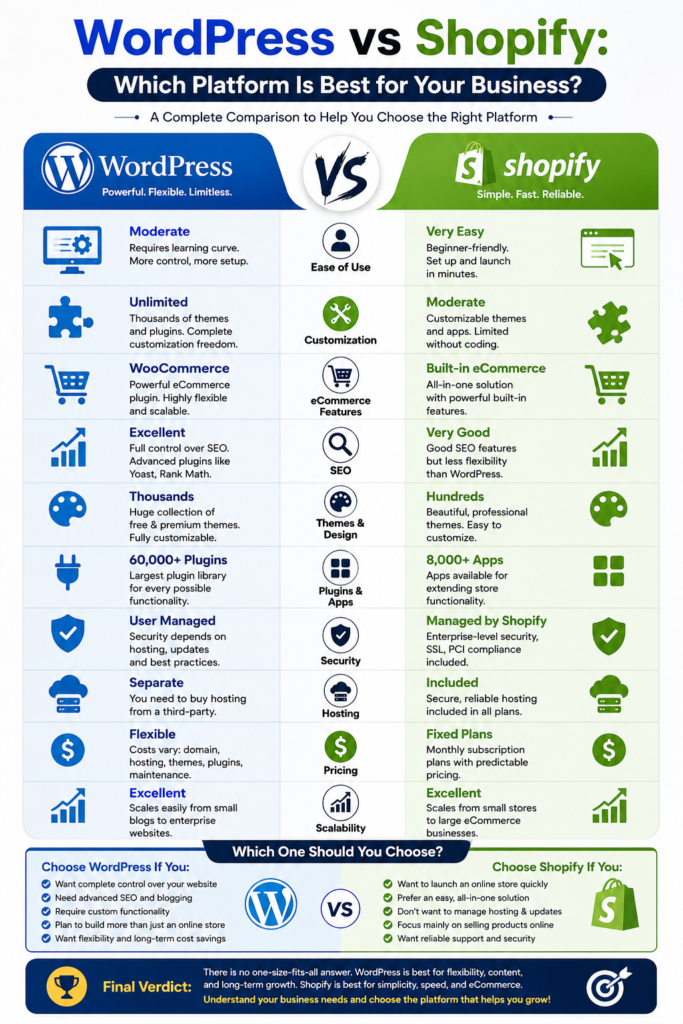
WordPress vs Shopify: Quick Comparison
| Feature | WordPress | Shopify |
|---|---|---|
| Ease of Use | Moderate | Very Easy |
| Hosting | Separate | Included |
| SEO | Excellent | Very Good |
| Customization | Unlimited | Moderate |
| Themes | Thousands | Hundreds |
| Plugins | 60,000+ | 8,000+ Apps |
| Blogging | Excellent | Basic |
| eCommerce | WooCommerce | Built-in |
| Security | User Managed | Managed by Shopify |
| Scalability | Excellent | Excellent |
| Monthly Cost | Flexible | Fixed Plans |
Ease of Use
WordPress
WordPress offers complete control over your website, but beginners may need some time to learn how themes, plugins, hosting, and updates work.
Pros
- Highly flexible
- Unlimited customization
- Large community support
Cons
- Requires maintenance
- Plugin management
- Hosting setup
Shopify
Shopify is designed for simplicity.
Everything—from hosting to SSL certificates—is managed for you.
You can launch an online store within hours without technical knowledge.
Pros
- Beginner-friendly
- Fast setup
- Automatic updates
- Secure hosting
Cons
- Less flexibility
- Monthly subscription
Customization
WordPress
This is where WordPress truly shines.
You can customize:
- Website layout
- Checkout process
- User dashboard
- Blog pages
- Landing pages
- Membership areas
- Custom functionality
Thousands of themes and plugins make almost anything possible.
Shopify
Shopify allows customization using themes and apps.
However, advanced changes often require Shopify Liquid coding or premium apps.
SEO Comparison
Search Engine Optimization is critical for long-term growth.
WordPress SEO Advantages
- Complete control over URLs
- Advanced SEO plugins
- Schema markup
- XML sitemap
- Image optimization
- Internal linking
- Technical SEO flexibility
Popular plugins include:
- Rank Math
- Yoast SEO
- All in One SEO
Shopify SEO Advantages
Shopify includes:
- SSL
- Fast hosting
- Mobile optimization
- Automatic sitemap
- Basic SEO settings
However, URL customization is more limited than WordPress.
Winner:
WordPress
Blogging
Content marketing remains one of the best ways to generate organic traffic.
WordPress
WordPress started as a blogging platform.
It offers:
- Categories
- Tags
- Author pages
- Related posts
- Advanced editors
- SEO optimization
- Content scheduling
Shopify
Shopify includes blogging but lacks many advanced publishing features.
Winner:
WordPress
eCommerce Features
WooCommerce (WordPress)
WooCommerce provides:
- Unlimited products
- Variable products
- Digital downloads
- Subscriptions
- Memberships
- Booking systems
- Custom checkout
Almost every feature can be extended using plugins.
Shopify
Shopify provides:
- Inventory management
- Shipping integration
- Payment gateways
- POS support
- Abandoned cart recovery
- Gift cards
- Multi-channel selling
Perfect for businesses focused primarily on selling products.
Security
WordPress
Security depends on:
- Hosting quality
- Plugin updates
- Backups
- Security plugins
- SSL
Popular security plugins include:
- Wordfence
- Sucuri
Shopify
Security is managed by Shopify.
It includes:
- SSL
- PCI Compliance
- Automatic updates
- Hosting security
Ideal for users who don’t want technical maintenance.
Pricing Comparison
WordPress Costs
Typical expenses include:
- Domain Name
- Hosting
- Premium Theme (optional)
- Premium Plugins (optional)
- Maintenance
Costs vary depending on your requirements.
Shopify Costs
Shopify offers fixed monthly plans.
Additional costs may include:
- Premium Themes
- Paid Apps
- Transaction Fees (depending on payment gateway)
Scalability
Both platforms scale well.
WordPress
Ideal for:
- Large corporate websites
- Multi-language websites
- Membership platforms
- LMS platforms
- Marketplace websites
Shopify
Ideal for:
- Growing online stores
- International selling
- Large product catalogs
- Multi-channel commerce
Pros and Cons
WordPress Pros
✔ Complete ownership
✔ Unlimited customization
✔ Best SEO capabilities
✔ Excellent blogging
✔ Thousands of plugins
✔ Lower long-term costs
Cons
- Learning curve
- Requires maintenance
Shopify Pros
✔ Easy to use
✔ Fast setup
✔ Secure hosting
✔ Excellent eCommerce features
✔ Reliable performance
Cons
- Monthly subscription
- Less customization
- App costs can increase over time
Which Platform Should You Choose?
Choose WordPress if you:
- Want complete control over your website
- Need advanced SEO
- Publish regular blog content
- Require custom functionality
- Plan to expand beyond eCommerce
Choose Shopify if you:
- Want to launch an online store quickly
- Prefer a hassle-free managed solution
- Don’t want to manage hosting or updates
- Focus primarily on selling products online
Final Verdict
There is no one-size-fits-all answer to the WordPress vs Shopify debate. The right choice depends on your business goals, technical expertise, and long-term strategy.
If content marketing, SEO, and customization are your priorities, WordPress is the stronger choice. If your primary goal is to launch and manage an online store with minimal technical effort, Shopify is an excellent option.
Evaluate your current needs, future growth plans, and budget before making a decision. Investing in the right platform today can save time, reduce costs, and support your business as it grows.
Frequently Asked Questions (FAQs)
1. Which is better for SEO: WordPress or Shopify?
WordPress generally offers greater SEO flexibility through powerful plugins, customizable URLs, and advanced optimization features.
2. Is Shopify easier to use than WordPress?
Yes. Shopify is designed for beginners and handles hosting, security, and updates automatically.
3. Can I build an online store with WordPress?
Absolutely. Using WooCommerce, WordPress can power everything from small shops to enterprise-level eCommerce websites.
4. Which platform is more affordable?
WordPress can be more cost-effective over time, but costs depend on hosting, themes, and plugins. Shopify has predictable monthly pricing but may incur additional app costs.
5. Can I migrate from WordPress to Shopify or vice versa?
Yes. Several migration tools and professional services make it possible to move products, content, and customer data between the two platforms with minimal disruption.