

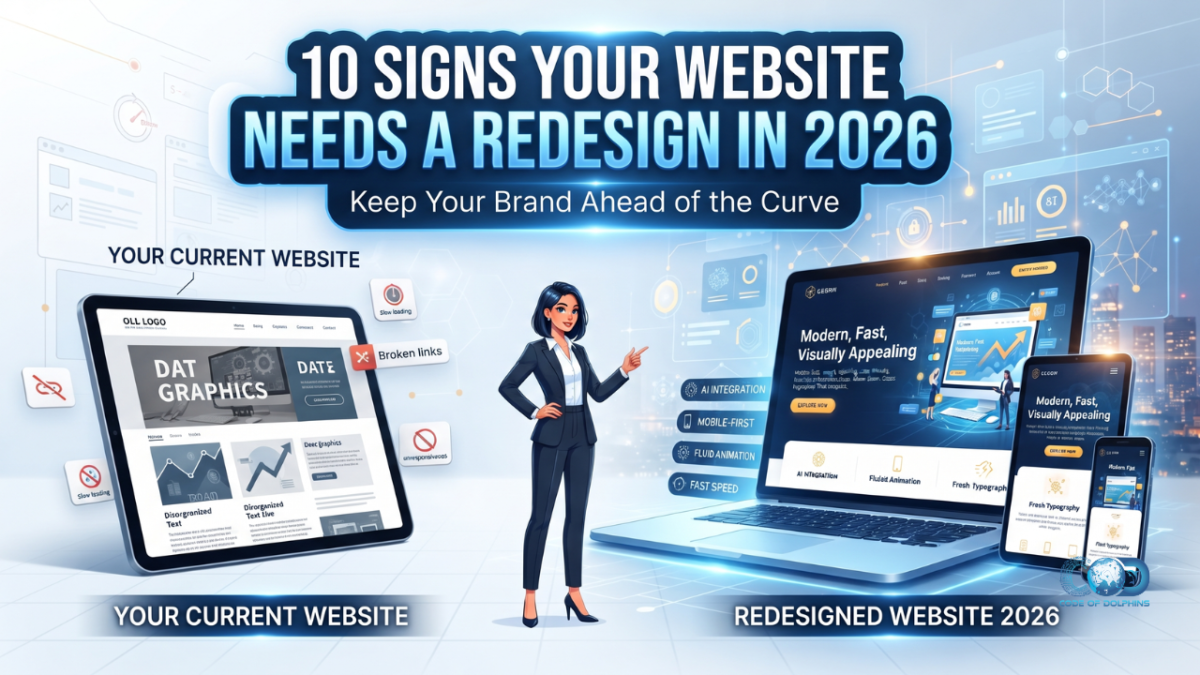
Your website is often the first impression customers have of your business. In today’s digital world, where user expectations continue to evolve, an outdated website can cost you visitors, leads, and revenue.
A modern website isn’t just about having an attractive design. It should be fast, mobile-friendly, SEO-optimized, secure, and focused on delivering an exceptional user experience.
If you’re wondering whether it’s time to refresh your website, here are 10Home clear signs that your website needs a redesign.
1. Your Website Looks Outdated
Design trends change every few years.
If your website still looks like it was built five or more years ago, visitors may assume your business is outdated as well.
A modern design builds trust and instantly improves brand credibility.
Signs include:
- Old color schemes
- Small fonts
- Poor spacing
- Outdated graphics
- Cluttered layout
2. Your Website Isn’t Mobile-Friendly
More than 70% of web traffic now comes from mobile devices.
If users need to zoom in, scroll sideways, or struggle to click buttons, they’re likely to leave and visit a competitor’s site.
A redesigned responsive website ensures a seamless experience across smartphones, tablets, and desktops.
3. Slow Loading Speed
Website speed directly impacts:
- User Experience
- SEO Rankings
- Conversion Rates
Even a one-second delay can increase bounce rates significantly.
Improve performance by:
- Optimizing images
- Reducing unnecessary scripts
- Using caching
- Choosing better hosting
- Optimizing CSS and JavaScript
4. High Bounce Rate
If visitors leave your website within seconds, it’s a warning sign.
Common reasons include:
- Confusing navigation
- Poor design
- Slow loading
- Weak content
- Unclear call-to-action
A redesign can dramatically improve engagement.
5. Low Search Engine Rankings
Google continuously updates its ranking algorithms.
An older website may lack:
- Proper heading structure
- Meta optimization
- Schema markup
- Mobile optimization
- Fast loading speed
- Technical SEO
A redesign allows you to build a strong SEO foundation.
6. Poor User Experience (UX)
Visitors should find information quickly and easily.
If customers frequently ask questions that should already be answered on your website, your user experience needs improvement.
A modern UX focuses on:
- Simple navigation
- Clear layouts
- Better readability
- Easy contact options
- Faster interactions
7. Your Website Doesn’t Reflect Your Brand
Businesses evolve.
If your services, logo, colors, messaging, or target audience have changed but your website hasn’t, your online presence becomes inconsistent.
Your website should communicate your current brand identity clearly.
8. Low Conversion Rates
Getting traffic is only half the battle.
If visitors aren’t:
- Calling
- Filling out forms
- Booking appointments
- Purchasing products
then your website isn’t converting effectively.
A redesign can improve:
- Call-to-action placement
- Trust signals
- Landing pages
- Forms
- User journey
9. Difficult to Update
If every small text or image change requires a developer, your website is costing you time and money.
Modern websites use CMS platforms that allow you to manage:
- Content
- Images
- Blogs
- SEO
- Banners
- Products
without technical knowledge.
10. Security and Technology Are Outdated
Older websites often run on outdated frameworks or plugins, making them vulnerable to cyber threats.
A redesigned website offers:
- SSL security
- Updated technologies
- Better hosting compatibility
- Improved performance
- Regular security updates
Keeping your website secure protects both your business and your customers.
Benefits of Redesigning Your Website
A professionally redesigned website can provide:
- Better Google rankings
- Faster loading speed
- Higher conversion rates
- Improved user experience
- Mobile responsiveness
- Stronger brand identity
- Better security
- Easier content management
- Increased customer trust
- More leads and sales
How Often Should You Redesign Your Website?
Most businesses should consider a website redesign every 3–5 years, or sooner if there are major changes in:
- Business goals
- Branding
- Technology
- User behavior
- SEO standards
Regular updates ensure your website stays competitive and aligned with current digital trends.
Final Thoughts
Your website is one of your most valuable business assets. If it’s outdated, slow, difficult to use, or failing to generate leads, investing in a redesign can significantly improve your online presence and business growth.
A modern website not only looks great but also delivers a better experience for users, performs well in search engines, and helps convert visitors into loyal customers.
If you recognize several of the signs above, now is the perfect time to plan your website redesign and stay ahead of the competition in 2026.
Frequently Asked Questions (FAQs)
1. How do I know if my website needs a redesign?
If your website is outdated, slow, not mobile-friendly, or has declining traffic and conversions, it’s likely time for a redesign.
2. Will a website redesign improve SEO?
Yes. A redesign that includes technical SEO, improved site speed, responsive design, and optimized content can significantly improve search engine rankings.
3. How long does a website redesign take?
Depending on the size and complexity of the project, a redesign typically takes between 2 and 8 weeks.
4. Will I lose my Google rankings after a redesign?
Not if the redesign is planned correctly. Proper URL redirects, SEO preservation, and technical optimization help maintain or even improve your rankings.
5. What should be included in a modern website redesign?
A modern redesign should include responsive design, fast loading speeds, intuitive navigation, SEO optimization, enhanced security, compelling calls-to-action, and a content management system (CMS) for easy updates.
Suggested SEO Keywords: website redesign, website redesign services, modern website design, responsive web design, website redesign company, SEO-friendly website, improve website performance, UX design, website optimization, business website redesign.
