

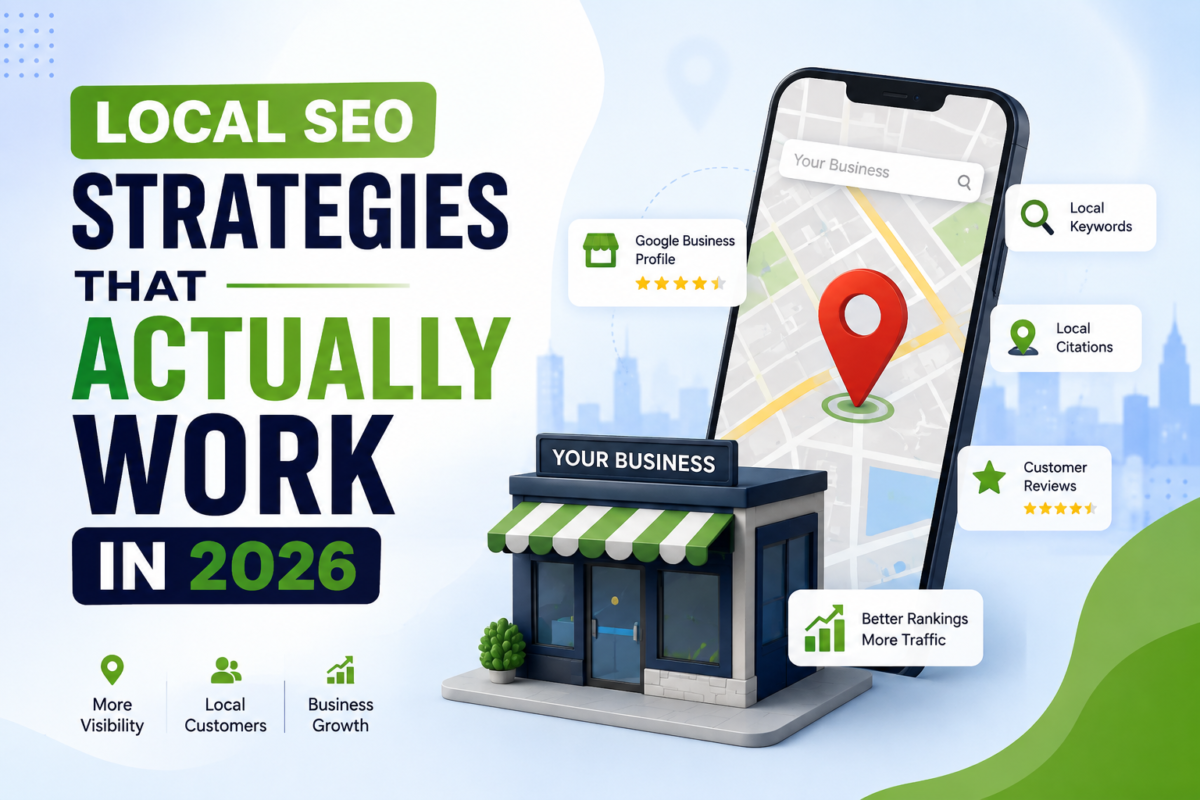
If you run a local business, being visible online is no longer optional. Customers are searching for restaurants, doctors, salons, real estate companies, service providers, retailers and professional services near them every day. The businesses that appear at the right moment in those searches have a much better chance of getting the call, message, visit or sale.
This is where local SEO comes in.
Local SEO helps businesses improve their visibility when people search for products or services in a specific location. But in 2026, simply adding a city name to your website or creating a Google Business Profile is not enough. Search engines are becoming better at understanding relevance, location, reputation, reviews and user intent.
The good news is that businesses don’t need hundreds of complicated tactics. They need to get the fundamentals right and consistently build a trustworthy local presence.
Here are some local SEO strategies that actually work in 2026.
What Is Local SEO?
Local SEO is the process of improving a business’s online presence so that it can appear prominently in searches connected to a particular geographic area.
For example, someone might search:
- best restaurant near me
- dentist in Kolkata
- digital marketing agency in Kolkata
- AC repair near me
- best salon in Salt Lake
- real estate company in New Town
These searches have strong local intent. The person isn’t just looking for information—they may be looking for a business they can contact or visit.
A strong local SEO strategy helps your business become more visible during these high-intent searches.
1. Optimize Your Google Business Profile
For most local businesses, Google Business Profile remains one of the most important parts of a local SEO strategy.
Your profile should be complete, accurate and regularly maintained.
Make sure you have:
- Correct business name
- Accurate address
- Working phone number
- Website URL
- Business category
- Relevant secondary categories
- Opening hours
- Business description
- Service information
- High-quality photographs
Don’t treat your profile as something you create once and forget.
Regularly add genuine business updates, photographs, services and other relevant information.
The goal is simple: when someone finds your business through Google, they should immediately understand who you are, what you offer and where you’re located.
2. Focus on Local Search Intent
One of the biggest mistakes businesses make is focusing only on broad keywords.
For example, a web development company might target:
“web development company”
But a person looking for a nearby provider may search:
“web development company in Kolkata”
or:
“website development company near me.”
These searches have different intent.
Your local SEO strategy should identify the phrases your potential customers actually use when looking for your products or services.
Think about:
- What service are they looking for?
- Where are they located?
- Are they ready to buy?
- Are they searching for a nearby business?
- What questions do they ask before contacting a business?
This helps you create pages and content that match real search behavior.
3. Create Location-Specific Website Pages
If your business serves multiple cities or areas, location-specific landing pages can be extremely useful.
For example, a digital agency could create pages such as:
- Digital Marketing Agency in Kolkata
- SEO Company in Kolkata
- Web Development Company in Kolkata
- Web Design Company in Salt Lake
- SEO Services in New Town
However, don’t create dozens of pages by simply changing the location name.
Each location page should provide genuinely useful information about that market.
Include:
- Services offered
- Areas served
- Local customer needs
- Relevant projects
- FAQs
- Contact information
- Local references where appropriate
This creates useful landing pages rather than thin, duplicate content.
4. Keep Your Business Information Consistent
Your business information should be consistent across your website and other important online platforms.
Pay particular attention to:
Name
Address
Phone number
Website
If different platforms show conflicting information, it can create confusion for both customers and search engines.
Create a standard business profile and use the same core information wherever your business is legitimately listed.
5. Get Genuine Customer Reviews
Reviews are extremely important for local businesses.
Think about your own behavior. If you’re choosing between two restaurants, clinics or service providers, you’re probably going to look at reviews before making a decision.
Encourage genuine customers to leave honest reviews after completing a purchase or service.
Don’t buy reviews or create fake ones.
Instead:
- Deliver a good experience.
- Ask satisfied customers for feedback.
- Make the review process easy.
- Respond professionally to reviews.
- Learn from negative feedback.
A business with a healthy collection of authentic reviews can build much stronger trust with potential customers.
6. Respond to Reviews Properly
Getting reviews is only part of the job.
Responding to reviews shows that your business is active and cares about customers.
For positive reviews, a simple personalized response can work well.
For negative reviews:
- Stay professional.
- Don’t argue.
- Acknowledge the concern.
- Explain the next step.
- Take the conversation offline when appropriate.
Avoid copying the same response to every customer.
Personalized responses feel more genuine and can strengthen your brand reputation.
7. Build Local Citations and Relevant Listings
Local citations are online references to your business, often including your name, address and phone number.
Relevant business directories, industry websites and local platforms can help strengthen your online presence.
But quality matters more than quantity.
Don’t submit your business to hundreds of low-quality directories simply to build links.
Focus on:
- Relevant industry directories
- Trusted local directories
- Professional organizations
- Local business associations
- Legitimate review platforms
A few relevant and trustworthy references are generally more valuable than a huge collection of spammy listings.
8. Build Locally Relevant Backlinks
Backlinks remain an important part of SEO, and local businesses can benefit from links that are relevant to their area and industry.
For example, a Kolkata-based business could potentially earn links through:
- Local publications
- Business associations
- Community organizations
- Industry events
- Local partnerships
- Genuine local sponsorships
- Relevant news coverage
The goal isn’t to buy hundreds of links.
The goal is to become a business that other relevant websites naturally want to mention.
9. Create Content Around Local Problems
This is one of the most underused local SEO strategies.
Instead of writing generic articles that every competitor is already publishing, create content around questions your local customers actually have.
For example:
“How Much Does a Website Cost in Kolkata in 2026?”
“Best Areas in Kolkata for Starting a New Business”
“How Local Businesses in Kolkata Can Generate More Leads Online”
“Things to Check Before Hiring a Digital Marketing Agency in Kolkata”
This type of content can attract people who are already interested in your market.
10. Optimize Your Website for Mobile Users
A large portion of local searches happen on smartphones.
Imagine someone searching for:
“restaurant near me”
while walking through a neighborhood.
They aren’t going to wait ten seconds for a website to load.
Your website should be:
- Mobile-friendly
- Fast
- Easy to navigate
- Easy to call
- Easy to find
- Easy to contact
Make important information immediately accessible.
For local businesses, your phone number, address, directions and contact options should never be difficult to find.
11. Improve Website Speed and Core Web Vitals
A beautiful website isn’t useful if it performs poorly.
Optimize:
- Images
- JavaScript
- CSS
- Fonts
- Server response time
- Mobile layouts
- Third-party scripts
Avoid unnecessary animations that slow down the experience.
A fast website can provide a better user experience and supports your broader SEO strategy.
12. Add Local Business Schema
Structured data can help search engines better understand important information about your business.
Depending on the business, relevant structured data may include:
- LocalBusiness
- Organization
- Service
- Product
- BreadcrumbList
- FAQPage where appropriate
Include accurate information.
Don’t add fake ratings, reviews or business details just to gain visibility.
Structured data should describe what is genuinely present on your website.
13. Create Dedicated Service Pages
Don’t put every service on a single page.
If you offer multiple services, create dedicated pages.
For example:
SEO Services
Local SEO Services
Web Development
Digital Marketing
Social Media Marketing
Google Ads
Each page can target a different search intent while providing detailed information about the service.
This also creates more opportunities for internal linking.
14. Strengthen Internal Linking
Internal links are often overlooked.
When you publish a blog post about local SEO, link naturally to your relevant service page.
For example:
Local SEO Strategies That Actually Work in 2026
→ Local SEO Services
→ SEO Services
→ Digital Marketing Services
This helps users discover related information and creates a clearer website structure for search engines.
15. Don’t Ignore “Near Me” Searches
Businesses often try to rank for phrases containing their city name but forget about location-based intent such as:
“near me”
Search engines can use location signals to understand where the searcher is and which businesses may be relevant.
You don’t need to create a page called:
“Best SEO Company Near Me.”
Instead, build a strong local presence through:
- Accurate business information
- Relevant local content
- Strong reviews
- Local links
- Good website structure
- Geographic relevance
That’s a much more sustainable approach.
16. Use High-Quality Local Images
Images can strengthen your local presence when they’re relevant and authentic.
Use photographs of:
- Your office
- Team
- Products
- Store
- Projects
- Events
- Local work
Avoid filling your website with generic stock photos that don’t represent your actual business.
For local businesses, authentic images can help potential customers feel more confident about choosing you.
17. Track What Is Actually Working
SEO should not be based on guesswork.
Monitor:
- Organic traffic
- Local search visibility
- Search queries
- Website calls
- Form submissions
- Direction requests
- Business Profile interactions
- Conversion rates
Tools such as Google Search Console and Google Analytics can help you understand how visitors discover and interact with your website.
The most important metric isn’t always rankings.
For a local business, qualified leads and customers matter more than simply being number one for a keyword.
Local SEO in 2026: What Should Businesses Avoid?
While implementing local SEO strategies, avoid shortcuts that can hurt your reputation.
Don’t:
- Buy fake reviews
- Create fake business locations
- Stuff keywords into content
- Build spammy backlinks
- Create hundreds of duplicate location pages
- Copy competitors’ content
- Use misleading business information
- Add fake schema ratings
These tactics might look attractive because they promise quick results, but sustainable local SEO is built on relevance, trust and a genuinely useful customer experience.
A Simple Local SEO Strategy for 2026
If you’re just starting, don’t try to do everything at once.
Start with these steps:
Month 1
- Optimize your Google Business Profile
- Fix website technical issues
- Make your website mobile-friendly
- Check business information consistency
- Research local keywords
Month 2
- Improve service pages
- Create location-specific content
- Start collecting genuine customer reviews
- Build relevant local citations
Month 3
- Publish useful local content
- Build local relationships and backlinks
- Improve internal linking
- Track leads and conversions
- Update your Google Business Profile regularly
Consistency is more important than trying to complete everything in a single week.
Final Thoughts
Local SEO in 2026 is less about manipulating search engines and more about becoming the most useful and trustworthy option for customers in your area.
A strong local SEO strategy combines a well-optimized Google Business Profile, useful website content, genuine reviews, relevant backlinks, mobile performance and a consistent online presence.
Most importantly, remember that rankings are only part of the equation.
The real goal is to turn local searches into real conversations, visits, enquiries and customers.
If your business serves a specific city or region, investing in local SEO can help you build visibility where it matters most—right in front of people who are actively looking for what you offer.
Start with the fundamentals, stay consistent, and build a local online presence that customers can trust.
